How do you think under pressure?
Most clinicians don’t struggle because they lack knowledge.
Pressure changes how they prioritise, decide and reassess.
Built from real frontline emergency medicine decision-making
Free clinical thinking assessment • Instant result • Personalised mini playbook

Built from real clinical decision-making under pressure

Emergency Care
Built around real emergency department decision-making under pressure.
deteriorating patients
incomplete information
rapid escalation decisions

Acute Assessment
Focused on the moment where clinical risk must be recognised early.
hidden deterioration
prioritisation under uncertainty
avoiding delayed action

Prehospital Thinking
Adapted from high-pressure prehospital and major incident decision-making.
limited information
rapid risk assessment
continuous reassessment

Clinical Reasoning
Structured around common cognitive failure patterns seen across healthcare.
premature closure
cognitive overload
delayed escalation
The old way: more knowledge
The real need: better thinking under pressure
Most clinicians try to improve by learning more guidelines, more facts and more pathways.
But under pressure, the problem is usually not what you know.
It is whether you can:
recognise instability early
prioritise what matters first
avoid locking onto the wrong diagnosis
act despite uncertainty
reassess before the situation changes.
What you'll get after the check

Your thinking type
Find out whether you default to speed, overload, early closure or hesitation.

Your pressure-risk pattern
See the specific decision-making trap that may affect you under pressure.

Your personalised mini playbook
Get a short, practical PDF tailored to your result.
Most clinicians fall into one of four pressure patterns

Intuitive Sprinter
Acts fast, may miss contradictions
Overloaded Processor
Sees everything, struggles to prioritise
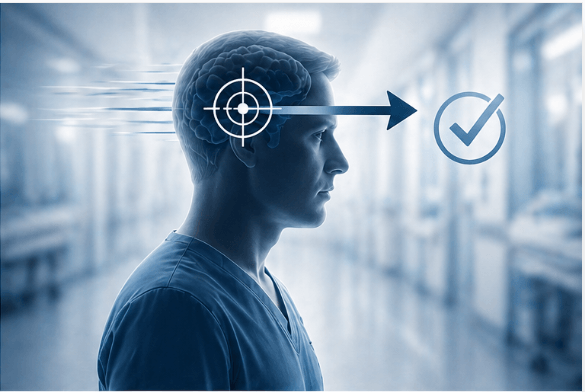
Premature Closer
Decides early, may stop reassessing

Hesitator
Waits for certainty, delays escalation
How it works
Step 1 - Complete the Clinical Thinking Check
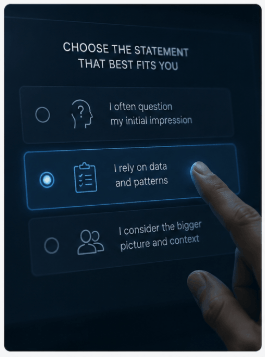
Step 2 - Discover Your Pressure Pattern
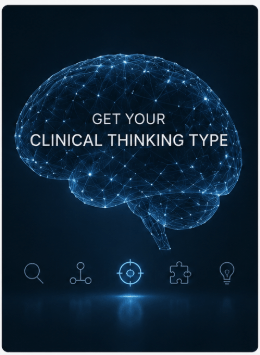
Step 3 - Apply the RADIAL Framework on Shift

About the author
Created by Dr James Wallace
Emergency Medicine Consultant, prehospital major incident doctor, and medical educator.
This framework is designed for clinicians working in acute, urgent, emergency, ward and prehospital care.
https://www.linkedin.com/in/james-wallace-ab7119113/
https://britishmedicalexperts.com/emergency-medicine-expert-witness/dr-james-wallace/

FAQs
Is this a clinical test?
No. It is a reflective tool that takes 10 seconds, to help you identify your default thinking pattern under pressure
Who is it for?
Clinicians and healthcare learners working in acute, urgent, emergency, ward or prehospital care.
Is this based on real clinical practice?
Yes. the framework was built from real emergency medicine, prehospital and acute care decision-making under pressure
What do i get afterwards?
Your result and a free mini playbook tailored to your clinical thinking type.